
Running a Sex Offender Check in Echols County
The Georgia Sex Offender Registry is the main public starting point. The Georgia Bureau of Investigation publishes it, while the Echols County Sheriff's Office collects local registration and change data. Search the state source first. Then contact the sheriff when a current address, compliance status, or recent change has real safety importance. The registry updates daily, but GBI notes that supplying agencies control the data sent into it.
The GBI registry landing page connects the public search, downloadable data, governing law, and state disclaimer.
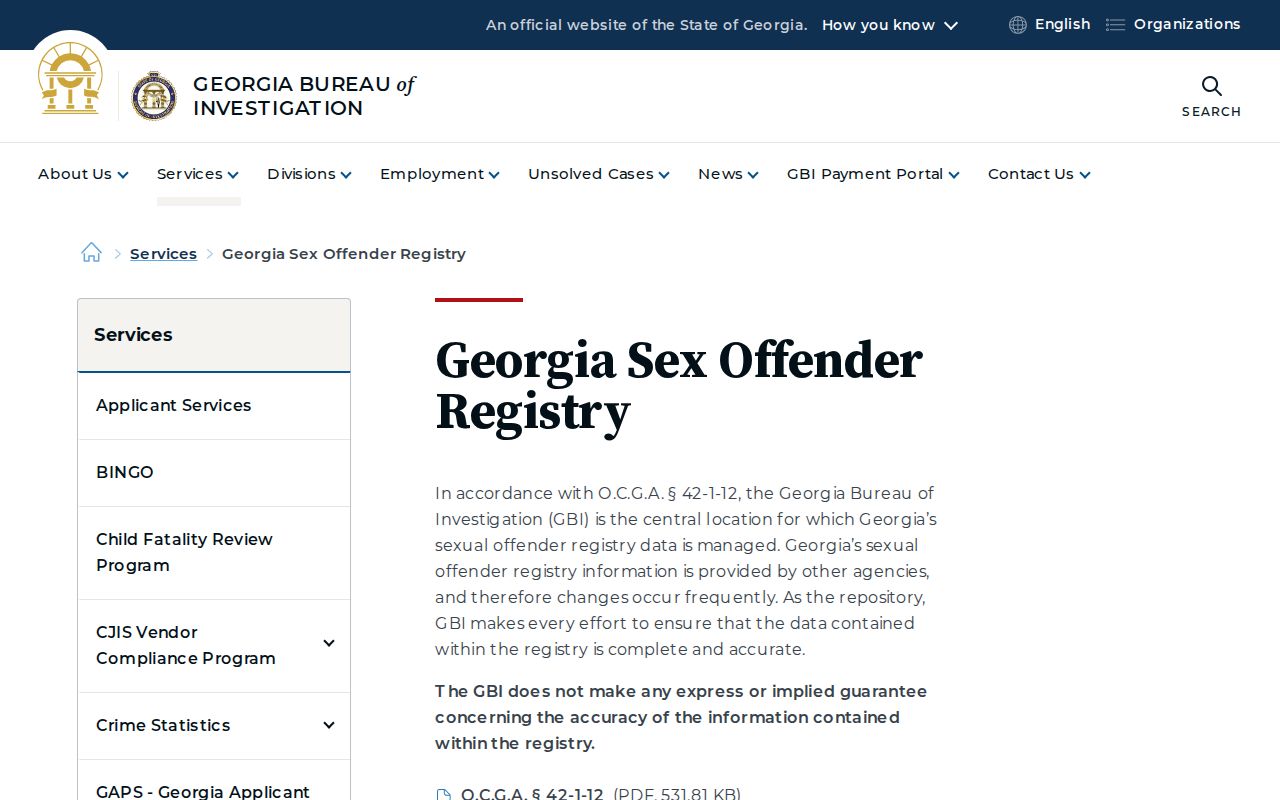
Keeping those links together makes the state source the clear starting point before any local confirmation call.
A name alone may point to the wrong person. Compare aliases, photograph, physical description, offense details, registration jurisdiction, and status. Location filters can narrow the list to Echols County, but they should not be treated as proof that every possible match has been found. The public system is free and changes often. It is not the same as Georgia Felon Search, a GCIC criminal-history record, a jail list, or a court docket.
Echols County Registry Data Flow
Several agencies can start or update a Georgia registration record. GBI enters a person who moves into Georgia from another state. The Georgia Department of Corrections and State Board of Pardons and Paroles enter records for people released or placed under their systems. Echols County Sheriff staff collect the residence or sleeping location, changes, and annual photograph and fingerprint verification. The sheriff must send updates within two business days, and the state publishes changes each day.
The Georgia Department of Corrections FAQ shows the separate corrections source that may feed the registration process.
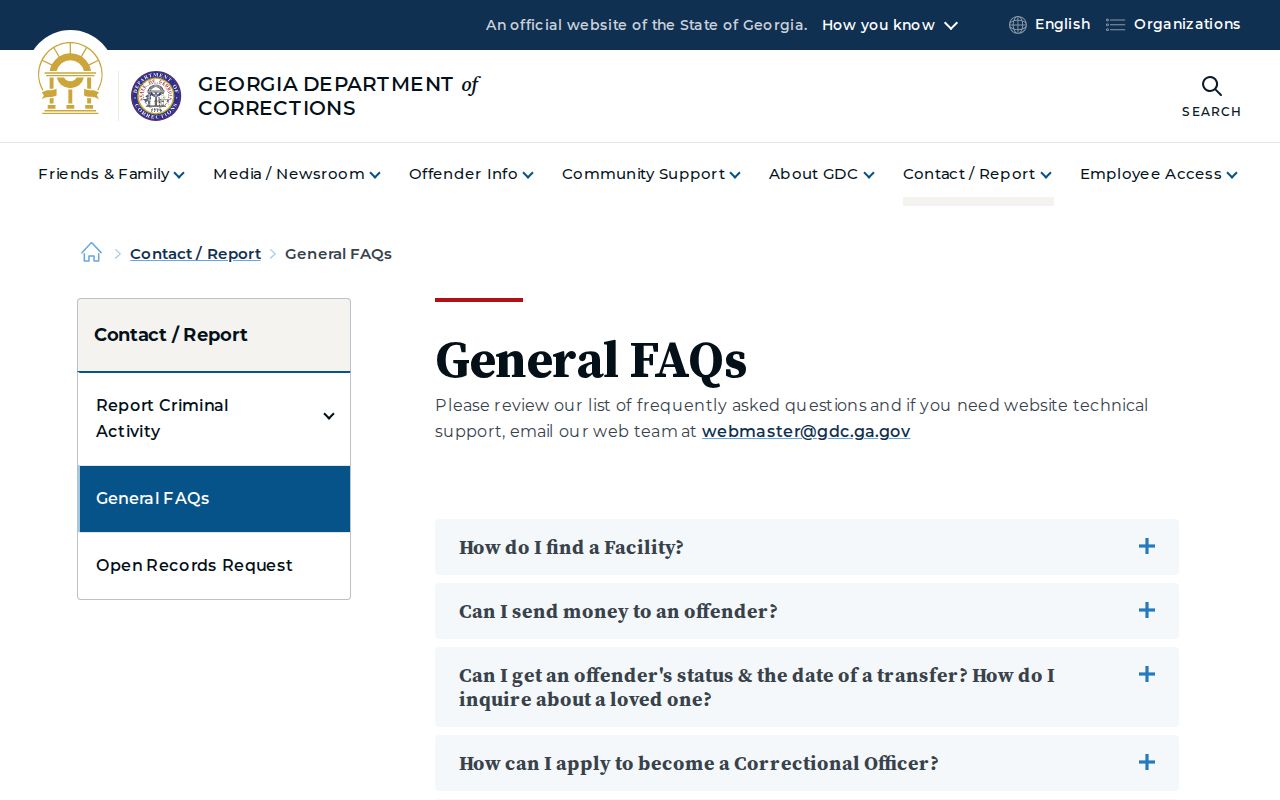
That agency role helps explain why a release event can precede the sheriff's local verification and the next daily public update.
The Georgia State Board of Pardons and Paroles is another official source in that chain.
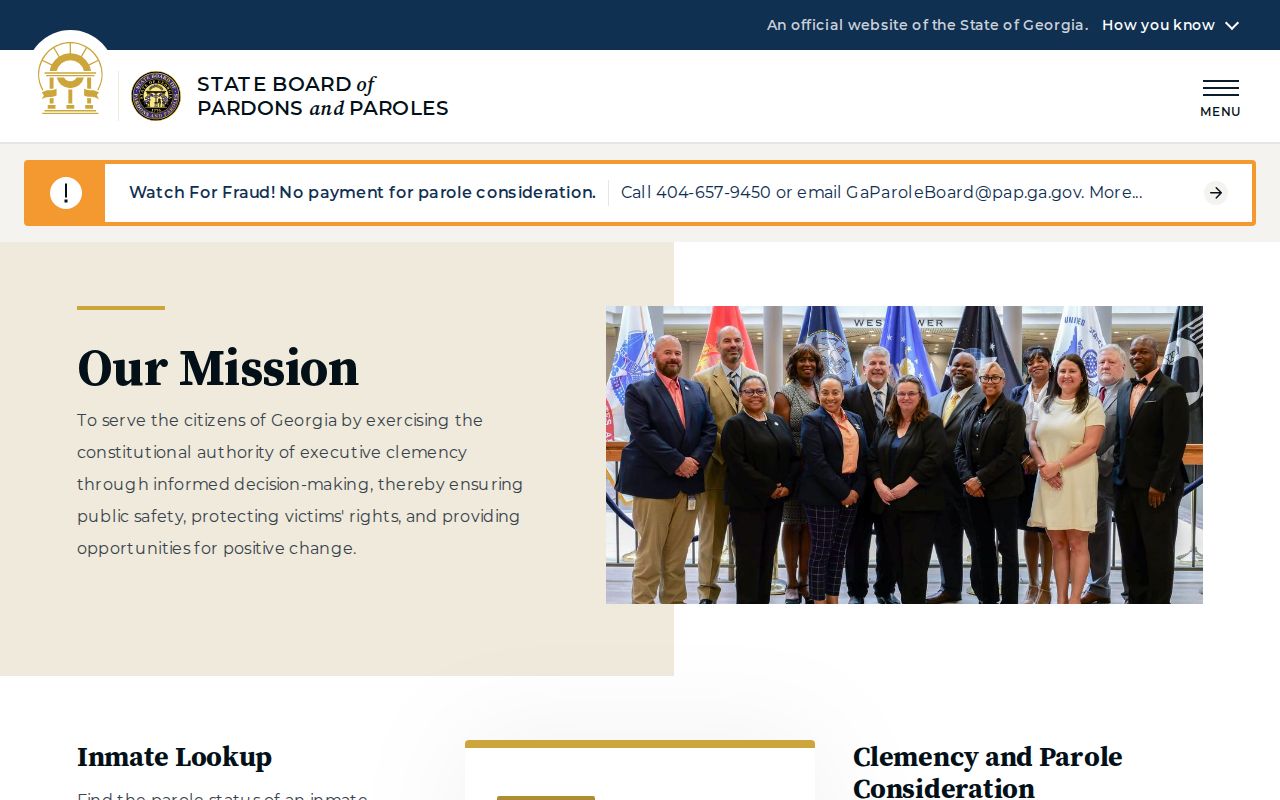
Parole data and registry data answer different questions, even when the same agency event helps create both records.
Searching the Georgia Sex Offender Registry
Use the official GBI interface and read its conditions before searching. The live labels can change. Official state materials confirm searches by identifying details and county, with location and map-style options historically available. Broad searches are useful for community awareness. A focused name search is better when checking one known identity.
- Open the GBI registry and review its notice about source data and accuracy.
- Enter known identifying details or select Echols County as the location filter.
- Compare the result list by photo, aliases, description, and registration status.
- Open the full profile, note its update details, and confirm key facts with the sheriff.
| Search Field | Use | Required | Reading Tip |
|---|---|---|---|
| Name or identifying information | Known-person search | No | Try a confirmed alias if the first name form fails. |
| County | Location filter | No | Select Echols for local results. |
| City, ZIP, or address | Area search | No | Statenville is unincorporated, so do not infer city jurisdiction. |
| Map or all offenders | Broad review | No | Check the live portal for the current button label. |
Echols County Registry Search Gaps
A blank search is not proof that a person has never committed a sexual offense. The GBI FAQ lists several reasons for no match: a wrong name or county, a record not yet submitted, a deceased registrant whose listing was deleted, an offense that does not require Georgia registration, successful First Offender completion, or a juvenile matter that did not result in an adult conviction.
The GBI registry FAQ is the best official source for those limits.
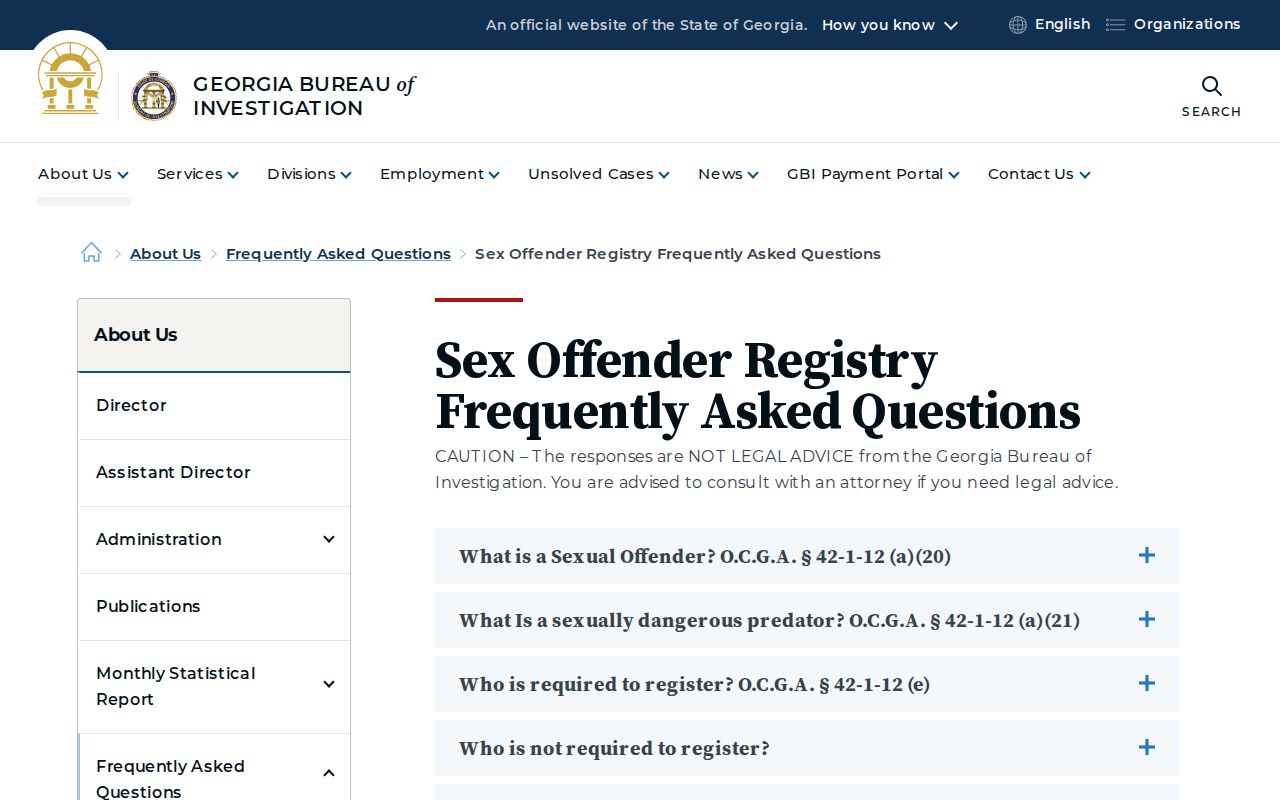
The FAQ turns a no-result into a prompt to check spelling, geography, timing, and legal coverage instead of drawing a broad conclusion.
Try a second pass before calling. Remove a middle name, check a known alias, and widen the location beyond Echols County if the person may have moved. A map result can also lag behind a very recent change. When the question affects an immediate safety plan, give the sheriff enough identifying detail to distinguish the person without assuming that the public search is complete.
What a Registry Profile Shows
A profile should be read as a set of linked facts. Start with identity, then status and timing, followed by the address or sleeping location and each listed offense. Classification describes assessed risk under Georgia law. It does not replace the conviction fields. Some entries also display employer or school information, vehicles, scars, marks, tattoos, or an absconder indicator.
| Name and Aliases | Published identity forms used to distinguish similar names. |
|---|---|
| Photo and Description | Photograph plus available physical traits for identity comparison. |
| Registered Location | Residence or sleeping-location information supplied through registration. |
| Offense Information | Conviction, offense, jurisdiction, date, and statutory details shown by the source. |
| Classification | Georgia risk assessment, which is distinct from federal duration tiers. |
| Status | Active, absconded, compliance, or verification information when displayed. |
Never copy a profile into a private local list. The source changes daily. A copied entry can outlive a correction, address update, or status change.
Echols County Registry Confirmation
Call the Echols County Sheriff's Office at 229-559-5603 or 229-559-5678 before relying on a fast-changing local fact. The registration office is at 109 General Deloach Street. Published sources do not state hours, appointment rules, or a fee, so call first. Ask whether the profile has a pending update and whether the displayed status reflects the latest local verification.
Echols County Sheriff's Office
109 General Deloach Street
Statenville, GA 31648
229-559-5603 or 229-559-5678
Local registration, change reporting, annual verification, and confirmation of current Echols County registry facts.
The official GDC county-jail directory entry is useful for distinguishing the local custody office from the registry function.
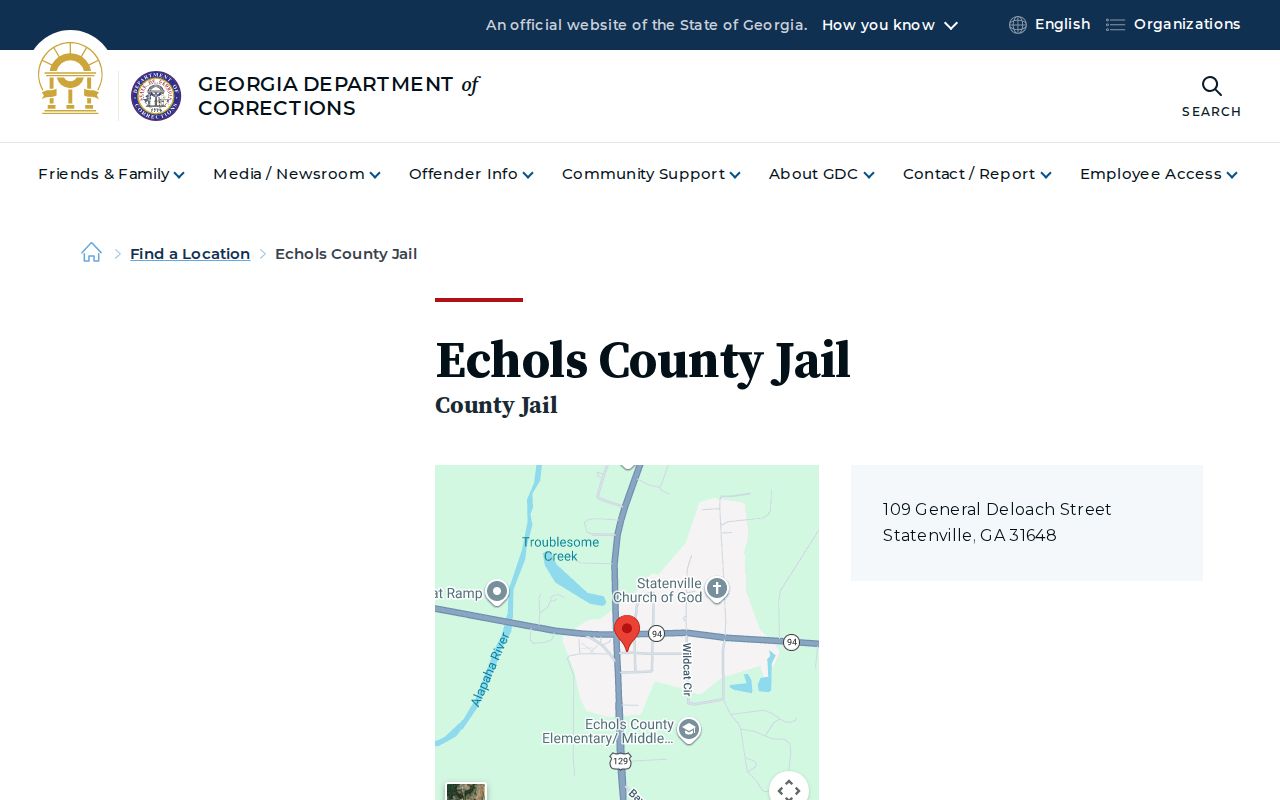
Custody and registration may involve the same sheriff's office, but a jail inquiry does not replace a registry confirmation.
Registration Requirements and Levels in Georgia
Georgia uses Level I, Level II, and sexually dangerous predator assessments. These are not the federal SORNA Tier I, II, and III duration chart. Georgia registration generally lasts for life unless a court grants relief under O.C.G.A. §42-1-19 or another law applies. All registrants report in person within 72 hours after release, placement on supervision, entry into Georgia, or establishing a residence. They renew within 72 hours before their birthday and report required changes within 72 hours.
| Georgia Classification | Duration | Verification Duty |
|---|---|---|
| Level I | Generally life unless legal relief is granted | Annual in-person birthday renewal and required change reports |
| Level II | Generally life unless legal relief is granted | Annual in-person birthday renewal and required change reports |
| Sexually dangerous predator | Lifetime statutory duties | Annual renewal plus an added verification six months after the birth month |
The official GBI classification statute page provides the state assessment framework.
Its categories should be read alongside the listed offense and status, not as a shorthand for every fact in the case.
Echols County Registry Beyond Georgia
The National Sex Offender Public Website adds a cross-state layer. It can help when a person recently moved, when the relevant conviction or registration jurisdiction is elsewhere, or when a safety review spans the Georgia line. NSOPW does not create a new master record. It searches participating jurisdictions, so the originating state or tribal registry remains the place to interpret a listing.
The Department of Justice NSOPW search provides that national route.
For an Echols County result, return to the Georgia profile and sheriff for the freshest local registration facts.
Echols County Registry Address Limits
Georgia residency, work, and loitering limits appear in O.C.G.A. §§42-1-15 through 42-1-17. Dates, definitions, exceptions, and grandfathering can change how a rule applies. A casual statement that one distance rule governs every person would be misleading. The registered address is information for awareness. It is not an invitation to visit, confront, photograph, or test compliance at the location.
The official GBI restriction text provides the statutory detail.
Case-specific legal advice may be needed to apply those provisions. Report suspected noncompliance to law enforcement rather than investigating it yourself.
Statenville is the unincorporated county seat, not a city with its own police department or municipal registry office. Local confirmation therefore stays with the Echols County Sheriff's Office. That point matters when a search field labels Statenville as a place: the label helps locate an address, but it does not create a separate city agency or another official list.
Lawful Use and Community Notification
Registry information supports personal, family, and community safety. Use it to understand an official listing, plan safe boundaries, or share a verified public source without adding rumor. If a profile shows an absconder or a suspected violation, use the official GBI tip route or contact Echols County Sheriff. Call 911 only for an emergency.
Misuse is unlawful: O.C.G.A. §42-1-12 states that intentional misuse of registry information to commit a criminal act against a registrant or household member can be prosecuted.
Threats, harassment, vigilantism, trespass, and unlawful discrimination are not public-safety tools. A registry entry also does not authorize contact with the listed person or anyone at the address. Keep the source link with any shared information so others can view the current official record rather than a stale screenshot.
For suspected absconding, preserve the current official profile URL and report the concern through GBI's tip option or the sheriff. Describe what prompted the concern without confronting anyone. Emergency conduct calls for 911. A routine question about an old update date, an unfamiliar status, or a possible move belongs on the sheriff's regular line.