
Echols County Criminal Courts
Echols County Superior Court has exclusive felony trial jurisdiction. Its clerk keeps accusations, indictments, pleas, motions, judgments, sentences, appeals, and public docket entries at 110 Highway 94 East in Statenville. Probate Court keeps county traffic cases and the specified misdemeanor matters assigned to it. Magistrate Court creates warrant, first-appearance, and probable-cause records, but it does not conduct a felony trial. Juvenile delinquency files pass through the clerk under confidentiality rules.
The county does not identify a separate State Court or municipal court. Statenville is an unincorporated census-designated place, so there is no Statenville municipal docket. The most useful first question is not merely whether a case exists. Ask which Echols County court holds it and whether the inquiry concerns an early magistrate event, a Probate traffic file, or a filed Superior Court criminal case.
| Court | Criminal role | Contact route |
|---|---|---|
| Superior Court | Felony charges, pleas, trials, sentences, appeals | 110 Hwy 94 E; 229-559-5642 |
| Probate Court | County traffic and specified misdemeanors | P.O. Box 118; 229-559-7526 |
| Magistrate Court | Warrants, first appearances, preliminary matters | Probate/Magistrate office; 229-559-7526 |
| Juvenile Court | Confidential delinquency matters | Clerk; 229-559-5642 |
Echols County Case Search Has No Portal
No official Echols County criminal docket search was found. Georgia also lacks one complete, free statewide trial-court criminal search. The Georgia Judicial Gateway points to participating judicial services, but it does not replace the Echols clerk. PeachCourt chiefly supports e-filing and document access, and the county sends record questions to the local office. A missing web result therefore does not mean that no case exists.
The clerk counter is the working index. Call Monday through Friday, 8:00 a.m. to 4:30 p.m., with the name, suitable identifying detail, approximate arrest or filing year, charge, and case number if known. Ask staff to check the correct court and request the docket before ordering a stack of papers. This keeps the search narrow and shows which signed documents matter.
The official Echols Superior Court clerk page documents the office and its duties. The captured clerk source also preserves the local access point used for Echols County criminal case questions.

The image reinforces a key limit: court staff can locate records, but legal advice and defense questions belong with counsel or the Georgia Public Defender Council.
Search Echols County Case Records
A clerk-assisted search works best when it starts broad enough to find the file but narrow enough to avoid a same-name mistake. Echols County does not publish a remote fielded interface, so the following fields are questions for staff or entries to verify on the docket, not promised online boxes.
- Decide whether the event belongs in Superior, Probate, Magistrate, or Juvenile Court.
- Call the clerk with the full name, approximate year, charge, and case number if available.
- Ask staff to distinguish a magistrate event from a filed Superior Court case.
- Request the docket sheet, then identify the accusation or indictment, plea, disposition, sentence, and bond or warrant entries needed.
- Choose plain or certified copies, ask for the current fee, and confirm pickup or delivery.
| Search field | Type | Required | Use |
|---|---|---|---|
| Full name | Text | Usually | Primary clerk index term; confirm spelling and aliases |
| Date of birth | Date | No | Offer when appropriate to separate similar names |
| Case number | Text | No | Best direct route to a known Echols County file |
| Arrest or filing year | Year | No | Narrows active, archived, and paper records |
| Charge or court | Text | No | Helps route Superior, Probate, or Magistrate custody |
Note: Clerk staff may identify and copy a record, but they cannot interpret an order, prepare pleadings, or advise whether restriction is available.
Echols County Felony or Traffic Case?
A booking charge and a filed court count are not the same thing. The arresting officer records the initial allegation. A prosecutor may later change, add, reduce, or decline a count. Felony accusations and indictments belong in Echols County Superior Court. A county traffic citation or listed misdemeanor may stay in Probate Court, while an early warrant or first appearance may leave only a Magistrate reference until prosecution moves forward.
Probate traffic court normally sits on the third Friday at 9:00 a.m., unless the citation or bond paper states otherwise. Mandatory appearances include arrests, DUI, reckless driving, road rage, misdemeanor marijuana, littering, affray, night hunting, and certain citations involving drivers under 21. That local schedule can explain why a traffic matter is not found in a felony search.
Echols County Criminal Case File Contents
The most valuable item depends on the question. A docket supplies the event list. The accusation or indictment identifies formal counts. A signed judgment or disposition order gives the result for each count, and the sentence order states the court's consequence. Certifications matter when an official copy is required; a screen image is not a certified court record.
| Case number and court | Identifies the Echols County file and the court that owns it; counter verification required. |
|---|---|
| Charging document | Shows accusation or indictment wording, statute, count, and filing date; counter verification required. |
| Docket entries | Lists hearings, motions, pleas, warrants, capias events, and filed orders; counter verification required. |
| Parties and counsel | May identify judge, prosecutor, and defense counsel, subject to redaction; counter verification required. |
| Disposition | States plea, verdict, dismissal, acquittal, nolle prosequi, or other count-level result; counter verification required. |
| Sentence and appeal | May show confinement, probation, fines, restitution, conditions, and linked appeal; counter verification required. |
Private identifiers, protected victim information, sealed material, and juvenile content may be withheld or redacted. Ask for the signed count-specific order when a docket abbreviation is unclear.
Read Echols County Case Outcomes Carefully
Georgia docket terms can mark very different results. None should be reduced to a vague label such as “closed.” Read the disposition for each count and compare it with the filed charge. A case may also be open, appealed, restricted, or sealed.
- Nolle prosequi
- The prosecutor declines to continue that charge at that time.
- Dead docket
- The court postpones the matter indefinitely; it is not the same as an acquittal.
- Dismissal
- The charge ends without a conviction under the stated order.
- Acquittal
- A not-guilty result after adjudication.
- First Offender
- A Georgia disposition that may avoid an adjudication of guilt after successful completion.
- Capias
- A court order directing that a person be taken into custody.
For felony prosecution context, the U.S. Attorney for the Middle District of Georgia is a separate federal authority, not the prosecutor for an ordinary Echols County Superior Court case.
The source image helps separate county-file terms from federal prosecution, which follows a different docket and custodian.
Echols County Criminal Case Stages
A recent event may not have reached the Superior Court index. Magistrate paperwork can exist while the prosecutor reviews the arrest. Once an accusation or grand-jury indictment is filed, arraignment gives the defendant a formal plea stage. Discovery and motions follow, then a plea or trial, a result for each count, and sentencing when appropriate. An appeal may create a linked record after judgment.
Case flow: Charges Filed › Arraignment › Pretrial › Plea or Trial › Disposition › Sentencing
The U.S. District Court for the Middle District of Georgia serves the federal layer for Echols County, but those dockets never become local clerk files.
The federal court image marks that jurisdictional break: federal filings stay with the district court, while Georgia felony filings stay with the Echols clerk.
When an Echols County Case Is Missing
Start with the event date. Ask Probate/Magistrate whether a warrant or first-appearance reference exists, then ask the Superior Court clerk whether an accusation or indictment has been filed. Supply the arrest date because name-only checks can miss a spelling variant or select the wrong person. If the event was traffic-related, confirm whether Probate Court owns it.
No Superior Court number does not prove that an arrest vanished. Screening may be pending, the matter may remain in another court, or the filed name may differ. Older Echols County criminal case material may also be paper, scanned, or archived. Ask the clerk what index was searched, whether retrieval takes more time, and whether a sealed file disappears or leaves a placeholder.
Georgia Felon Search cannot settle the question because it exposes only a public felony-conviction slice. GCIC records serve a different purpose. For a person's own fingerprint-linked federal identity history, the FBI electronic request channel is also separate from the court file.
The image underscores why identity-history results and a clerk docket should be compared, not treated as interchangeable.
Echols County Federal Case Layer
Federal criminal cases are searched through PACER, not the Echols County clerk or Georgia Felon Search. PACER requires an account and uses the judiciary's current fee schedule. Search by party or case number, inspect the docket, and obtain the needed filings. A donated copy elsewhere is not the official court record.
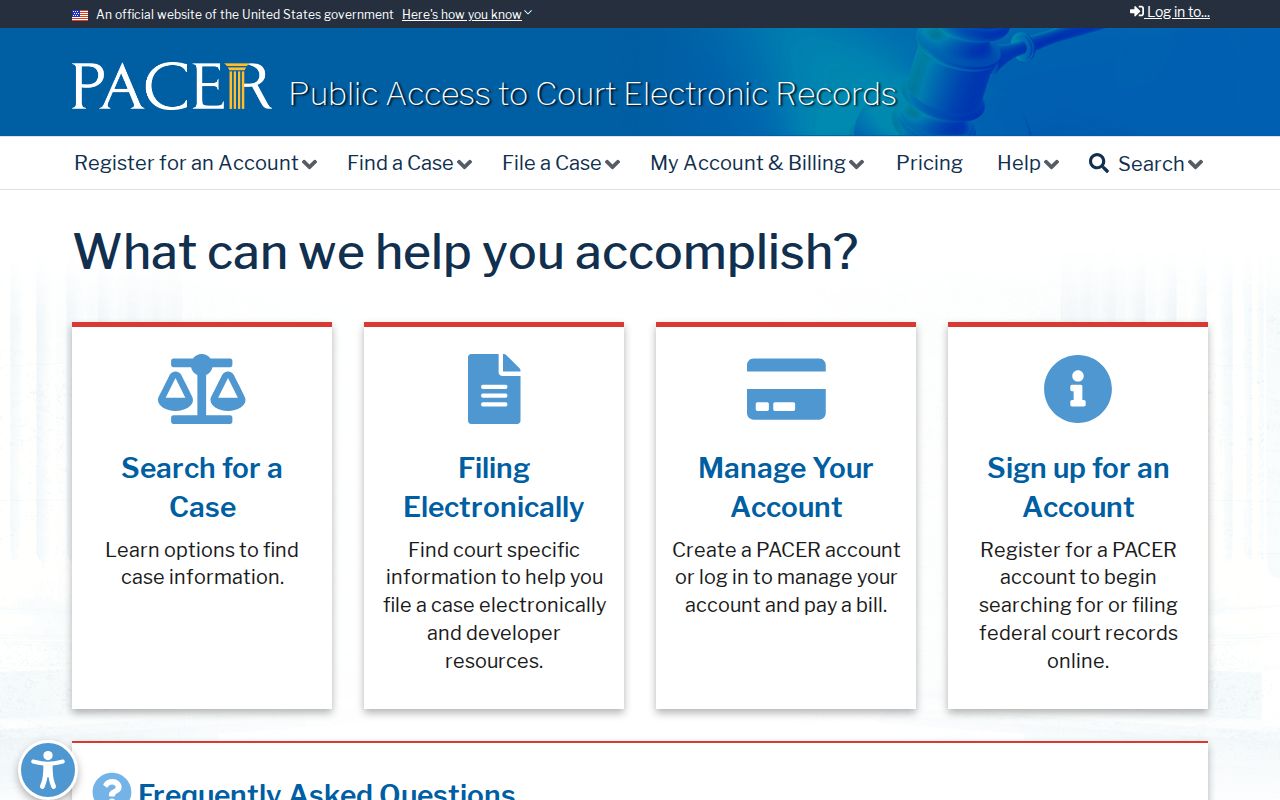
The PACER source shows the distinct gateway for federal dockets affecting an Echols County person or event.
Custody also splits by system. The Federal Bureau of Prisons inmate locator covers federal confinement, not the Echols County jail or Georgia Department of Corrections.
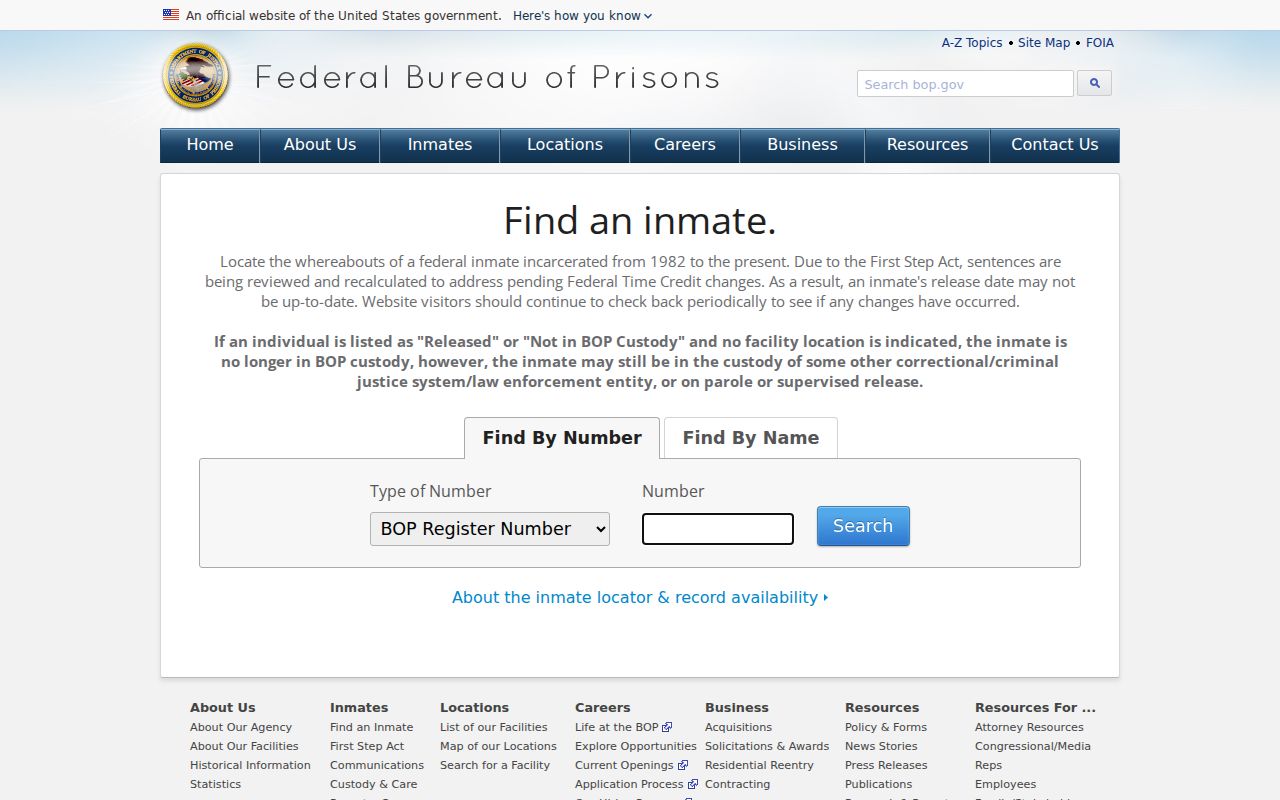
The BOP image connects a federal sentence to federal custody while keeping it apart from the county's court and jail records.
Echols County Case Access and Restrictions
The Georgia Open Records Act guidance states the broad open-record policy, but court access still respects confidentiality and sealing. Juvenile cases, protected victim information, Social Security numbers, medical or financial data, and material covered by a sealing order may be unavailable. A public view can also omit details that remain available to the subject or authorized justice officials.
Georgia record restriction limits ordinary noncriminal-justice dissemination for qualifying records. Sealing hides corresponding court material from usual public view. Neither term means that every copy has been destroyed. Under O.C.G.A. §35-3-37, specified justice officials, the subject, qualifying counsel, and a person acting under court order retain defined access routes.
When an Echols County court file is disposed but a GCIC history lacks the outcome, obtain the signed certified disposition and use the Georgia Bureau of Investigation correction route. When the court index itself remains visible after a sealing order, return the signed order to the clerk. Each custodian must correct the system it controls.
Note: Request a fee quote before ordering copies because Echols County publishes no current local criminal-file copy or certification schedule.